

17.Oct.2025
Climate Action
Climate governance architecture
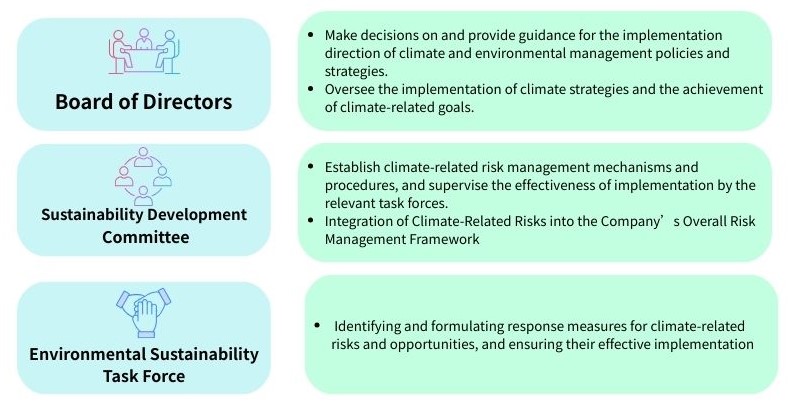
In response to the challenges posed by climate change, companies must establish a robust climate governance framework to effectively address related risks and opportunities. East Tender Optoelectronics Co., Ltd. strengthens its climate management through a clear organizational structure and the implementation of policies aligned with governance levels.
The Board of Directors is responsible for making decisions on climate and environmental management policies, while the Sustainability Development Committee oversees the Environmental Sustainability Group, the Sustainability Governance Group, and the Social Responsibility Group. These groups are tasked with promoting climate change response initiatives and fostering cross-departmental collaboration across environmental management, social actions, and corporate governance, thereby comprehensively advancing the Company’s sustainable governance objectives.
Climate-related risks and opportunities
East Tender Optoelectronics regularly monitors and reviews international trends and peer developments related to climate issues on an annual basis.
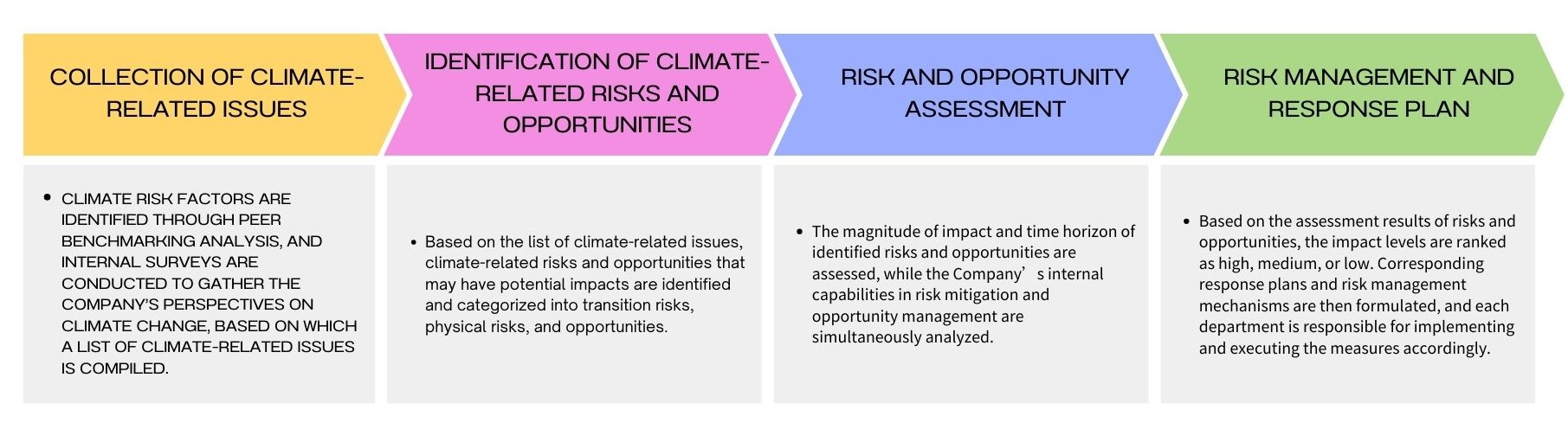
Through systematic risk identification and assessment processes, the Company identifies climate-related risks and opportunities, evaluates their potential impacts and implications, and formulates appropriate response strategies. These efforts aim to enhance corporate climate resilience while ensuring that all related processes are continuously optimized and effectively implemented.
Climate-related risk identification and management process
Climate-related risk and opportunity identification results
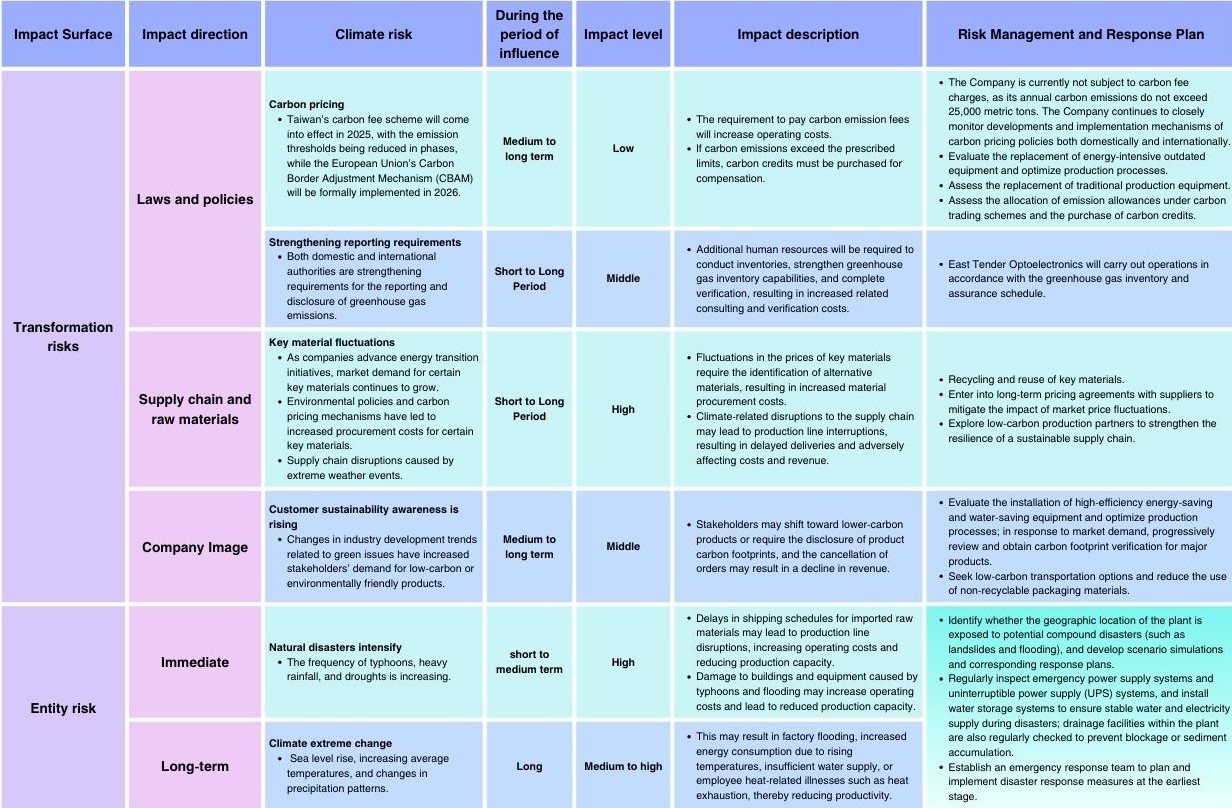
Under the supervision of the Board of Directors, East Tender Optoelectronics conducts a systematic identification process based on the time horizon and magnitude of impact of various risks. Through this process, the Company identifies climate-related transition risks, physical risks, and opportunities, as summarized in the table below. Corresponding response plans and risk management mechanisms are formulated to comprehensively monitor the implementation status of climate-related risk management. This information serves as an internal reference to enhance the Company’s understanding of climate change challenges and to facilitate collective evaluation of the feasibility of response strategies.
(1) Climate-related risk response plan
(2) Climate-related opportunities and response plans
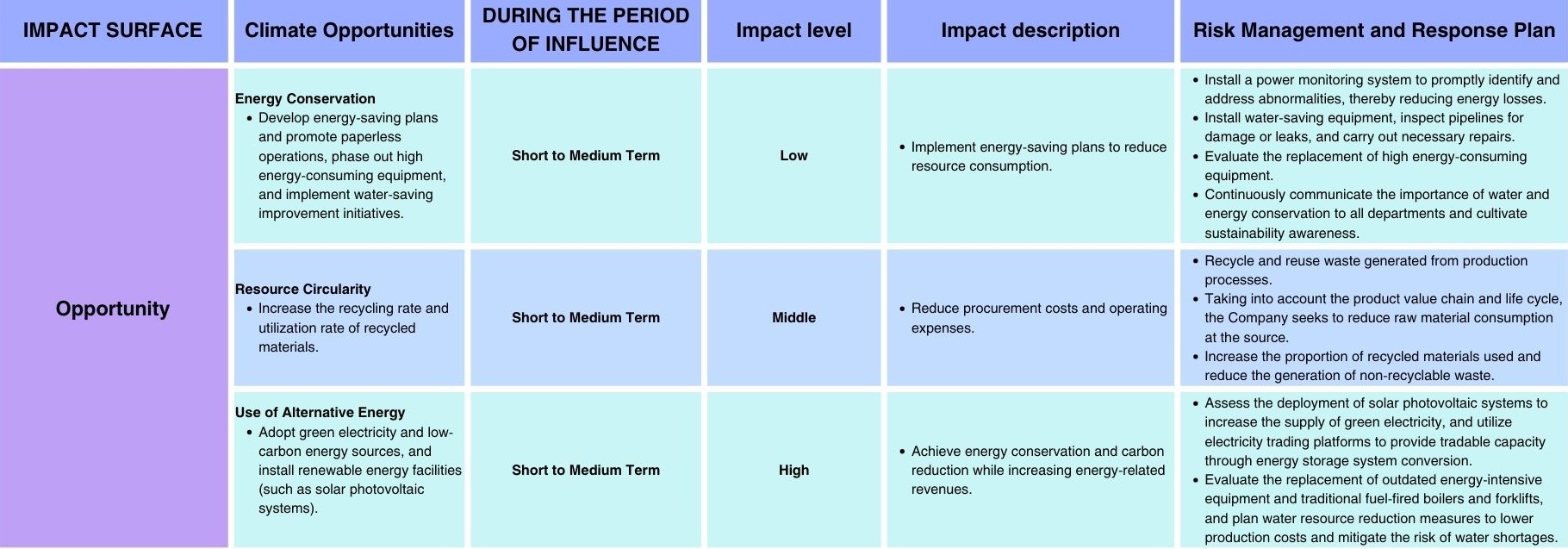
Note: Impact timeframe is defined as short-term (1–3 years), medium-term (4–7 years), and long-term (over 7 years).
Impact Level:High: NT$5 million or above ; Medium: NT$3–4.99 million ; Low: below NT$2.99 million.